Japandi living room: what makes it work
Japandi blends Japanese calm with Scandinavian warmth. Here is what actually defines the style, the palette and materials that carry it, and the mistakes that make it look flat.
Updated November 1, 2026 · 5 min read
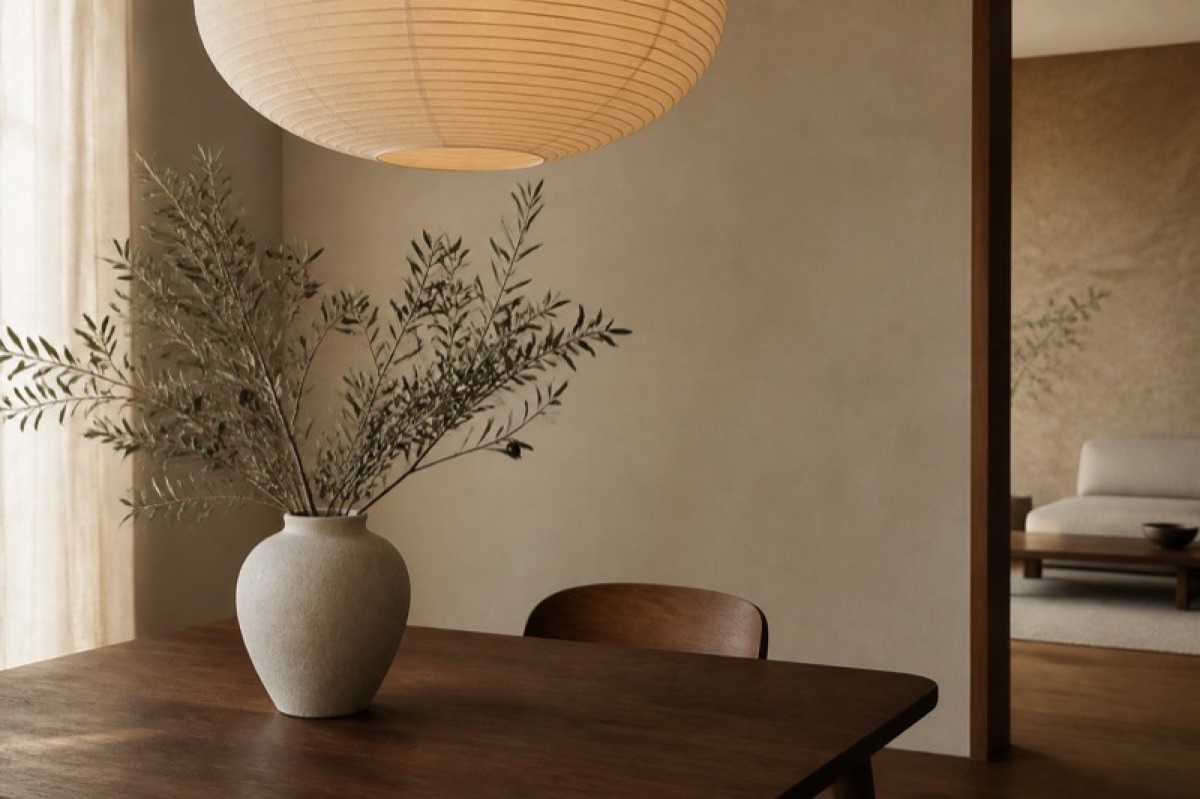
A Japandi living room is low, light and quiet: natural wood, linen and paper, a muted palette of warm whites, sand and charcoal, few objects, and handmade pieces with visible texture. Its warmth comes from materials, not from decoration.
Where the style comes from
Japandi borrows two things from Japanese interiors, restraint and a respect for imperfect, handmade things, and one big thing from Scandinavian homes: comfort. The result is calmer than most Scandinavian rooms and warmer than most minimalist ones.
The palette
- Base: warm white, oat, sand or greige walls. Avoid stark blue-white.
- Wood: oak or ash for lightness, walnut for depth. Two wood tones at most.
- Accents: charcoal, black, deep olive or terracotta, used sparingly.
- Green: one or two sculptural plants, not a jungle.
Materials that carry it
Japandi lives or dies on texture. Linen and cotton upholstery, wool or jute rugs, paper or rattan lamp shades, stoneware and unglazed ceramics, matte finishes. Glossy surfaces and chrome pull it towards a generic modern look.
Furniture: low and simple
Lower seating, simple frames with visible legs and clean joinery, and fewer, better pieces. A low sofa with a straight back, a round or rectangular wooden coffee table, a bench or a low shelf instead of tall cabinets. Leave some floor showing; empty space is part of the style.
Light
Use warm bulbs, around 2700 K, and diffuse them: a paper pendant or floor lantern, a linen-shaded table lamp, maybe a low light on a shelf. Avoid bare bright downlights in the middle of the ceiling; Japandi rooms glow rather than shine.
Common mistakes
- Too many small decorative objects. Keep three to five meaningful pieces in view.
- Everything the same beige. Add one dark wood or charcoal accent and one green.
- Flat-pack furniture with fake wood grain. One real wood piece does more than five imitations.
- Cold lighting. Swap cool white bulbs for warm ones before buying anything else.
Try it on your own room
The fastest way to see whether Japandi suits your space is to see your own room in it. Send a photo to room redesign, choose a Japandi direction or describe it in your words, and you get the design with every piece found in stores in your country.
Questions people ask
What is the difference between Japandi and Scandinavian style?+
Japandi is lower, quieter and more restrained, with darker accents and more emphasis on handmade texture. Scandinavian rooms are usually brighter, more playful and more cosy.
What colours work in a Japandi living room?+
Warm whites, oat, sand and greige as a base, oak or walnut wood, and small accents of charcoal, black, olive or terracotta.
Is Japandi expensive?+
Not necessarily. It uses fewer pieces, so spend on one good sofa and a natural rug, and keep the rest simple.
Does Japandi work in a small living room?+
Very well. Low furniture, a light palette and fewer objects make small rooms feel larger.
Keep reading
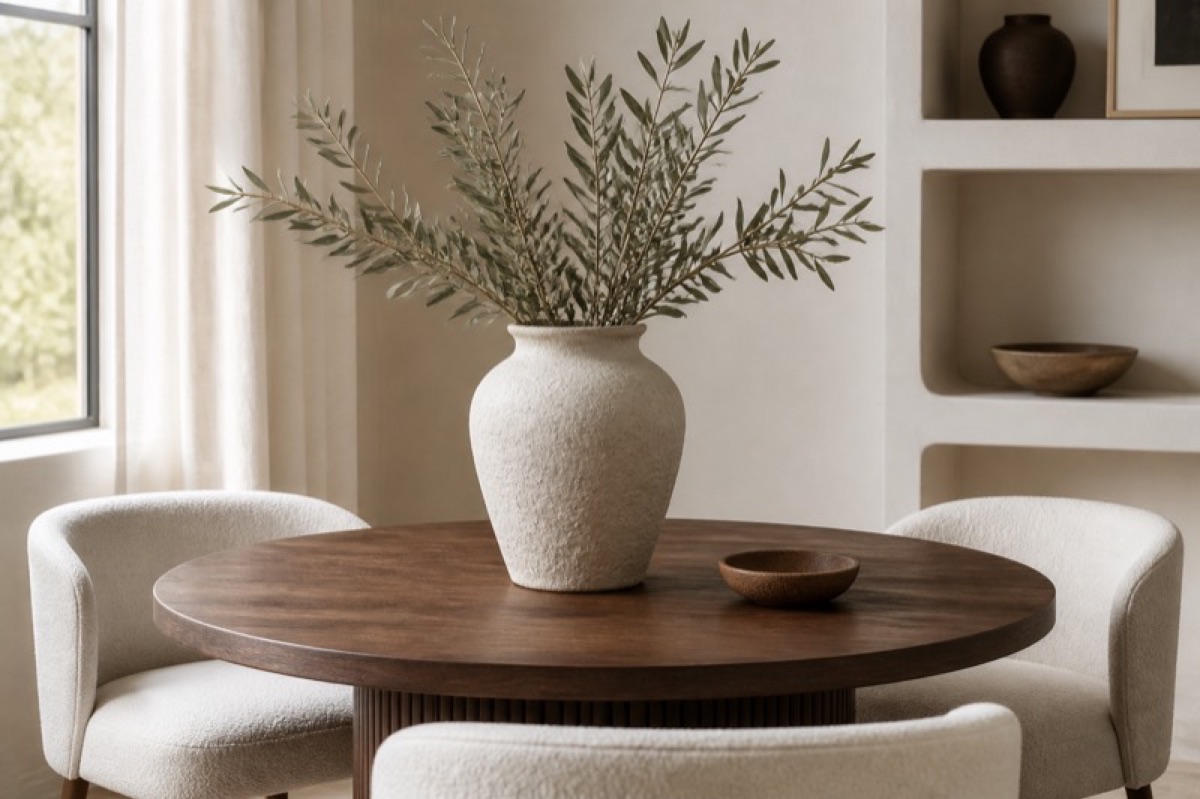 4 min readWarm minimal style without it feeling coldMinimal rooms can feel like waiting rooms. Warm minimalism keeps the calm and adds the comfort: texture, wood, curves and soft light.
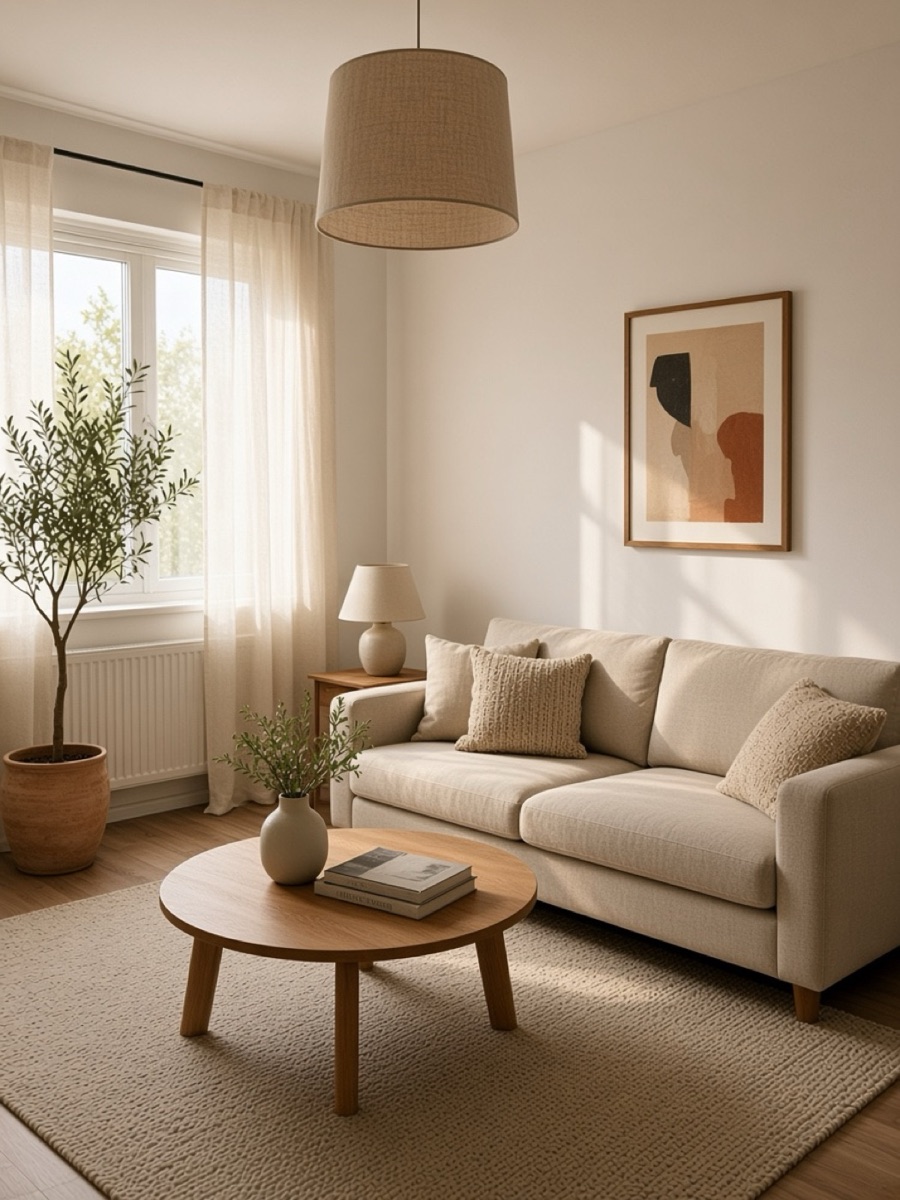 5 min readSmall living room ideas that make it feel biggerTen practical ways to make a small living room feel larger, from rug size and furniture legs to curtain height and light, with a real before and after.
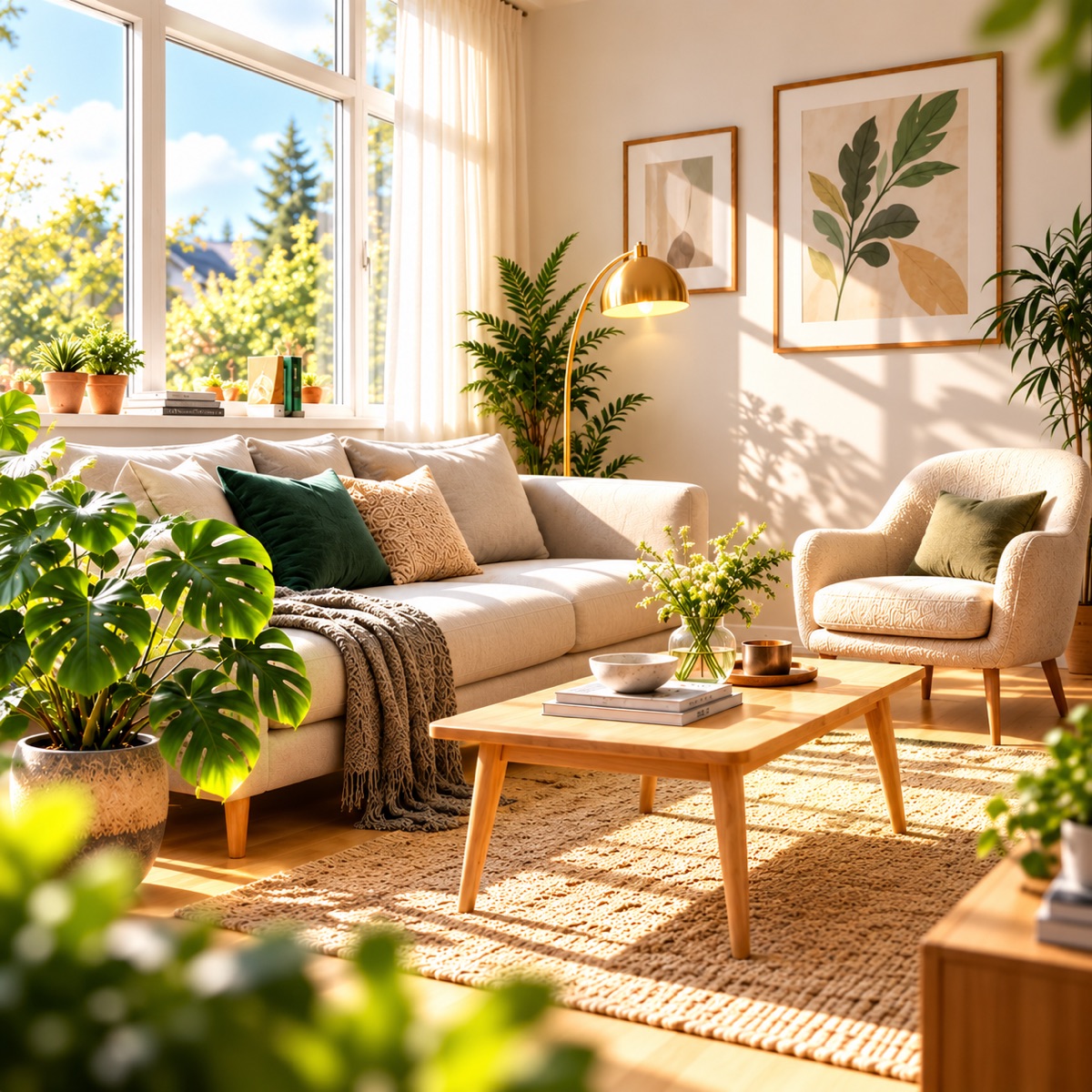 4 min readLighting a room in layers: ceiling, floor and table lampsWhy one ceiling light makes a room flat, and how to light it in three layers with warm bulbs at the right heights.